Test Automation That Still Works as the Team Grows
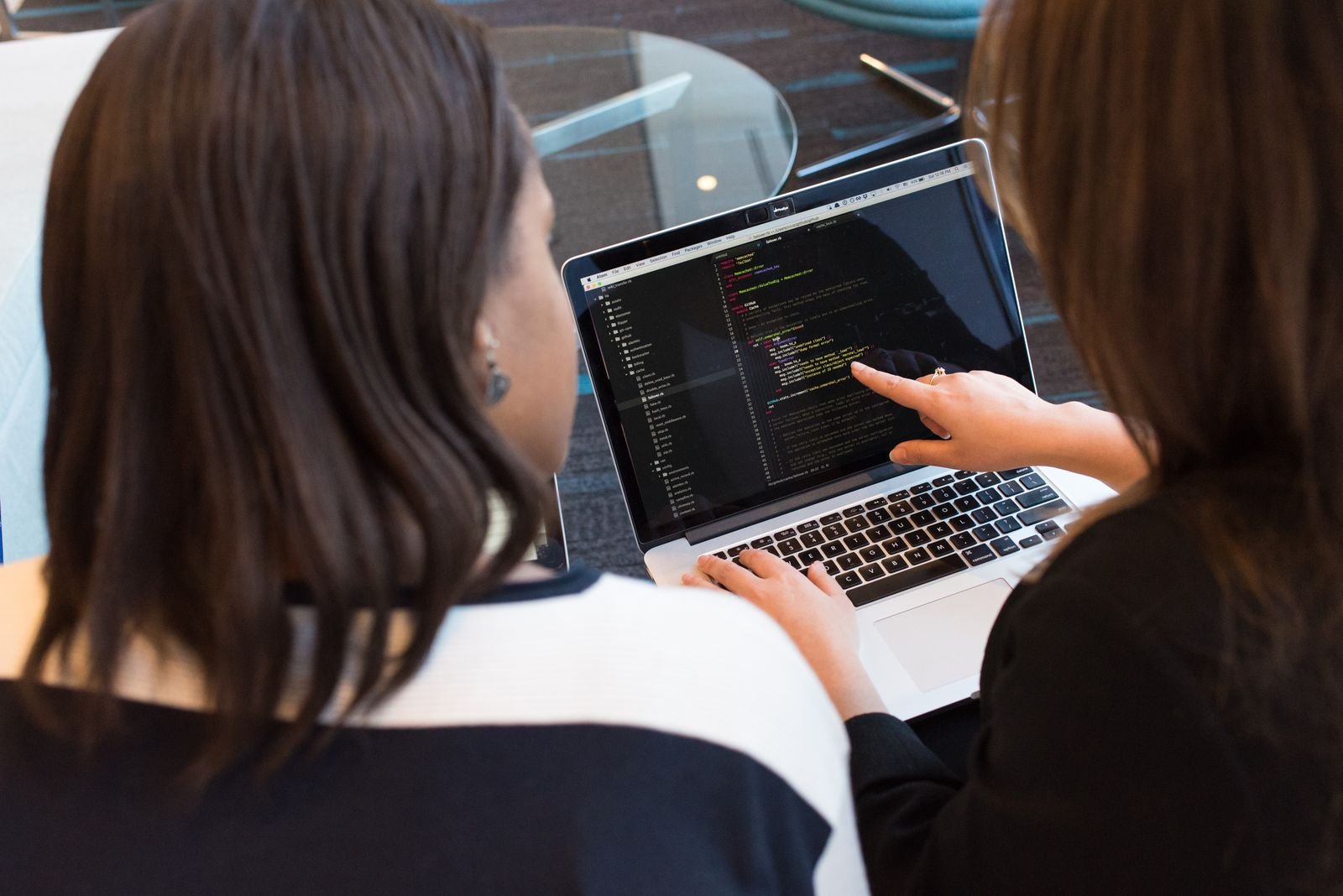
A pull request goes red. The developer clicks rerun. It goes green. Everyone moves on.
That looks harmless until rerunning becomes the normal way to merge code. At that point, the test suite is no longer protecting the release. It is generating background noise, and the team has quietly learned to ignore it.
Test automation rarely collapses because nobody wrote enough tests. It collapses because ownership, execution time, test data, failure handling, and release decisions were never designed to survive team growth.
The strategy needs to scale before the test count does. This checklist is how I approach it.
Start with release risk, not a tool comparison
Buying another test platform will not tell you what deserves protection. Start by writing down how the product can hurt users or the business.
- [ ] Identify the workflows that must work for every release.
- [ ] Record failure modes involving money, access, data loss, privacy, and irreversible actions.
- [ ] Map each risk to the cheapest test capable of detecting it reliably.
- [ ] Leave low-value cosmetic checks out of the blocking pipeline.
A payment calculation probably needs focused unit tests, API tests around provider behavior, and a small number of end-to-end checks. It does not need fifty browser scenarios that all log in, fill the same form, and fail when somebody renames a button.
This is where QA becomes quality engineering. The goal is not maximum coverage. The goal is useful evidence about whether a release is safe enough to ship.
Give every test an owner
Shared ownership often means nobody touches the suite until it blocks a release. Put ownership beside the code.
- [ ] Require the team changing a service to maintain its unit, integration, and contract tests.
- [ ] Assign cross-service journeys to a named product or platform team.
- [ ] Route failures to the people who can fix them.
- [ ] Include test changes in the same review as production changes.
A central QA team should shape standards, provide tooling, and challenge weak coverage. It should not become a repair desk for tests written by everyone else.
Use CODEOWNERS where it helps:
/services/billing/ @billing-team
/tests/contracts/billing/ @billing-team
/tests/e2e/checkout/ @commerce-team @qa-platform
/performance/checkout/ @commerce-team @platform
Ownership must be visible and boring. If finding the owner requires archaeology in Slack, maintenance will lose.
Keep the fast path genuinely fast
As the team grows, more commits arrive and CI contention becomes a product problem. A ten-minute job does not merely cost ten minutes. It interrupts thought, encourages larger pull requests, and makes developers batch risky changes.
- [ ] Run linting, type checks, unit tests, and narrow integration tests on every pull request.
- [ ] Run affected tests when dependency information is trustworthy.
- [ ] Move broad browser suites and expensive compatibility checks to merge queues or scheduled runs.
- [ ] Keep a small release smoke suite that exercises critical paths against the deployable artifact.
Do not split tests only by directory. Split them by purpose and expected duration. Pytest markers are simple and sufficient for many teams:
[pytest]
markers =
 smoke: critical release checks
 integration: tests requiring local dependencies
 slow: tests unsuitable for the pull request path
Then make each CI lane explicit:
pytest -m "not slow" --junitxml=reports/pr.xml
pytest -m smoke --junitxml=reports/smoke.xml
pytest -m slow --junitxml=reports/nightly.xml
A scheduled suite is not a dumping ground. Somebody still needs to read its failures before they fossilise.
Treat flaky tests as defects
A flaky test is not an inconvenience. It trains the team to distrust all failures, including the real one that appears during a bad release.
- [ ] Track every intermittent failure with an owner and expiry date.
- [ ] Quarantine only the affected test, not its whole suite.
- [ ] Keep quarantined tests visible and non-blocking.
- [ ] Fix or delete them instead of adding unlimited retries.
Retries can confirm that a failure is intermittent. They cannot make the test healthy. One controlled retry may help collect evidence, but a green result after retry should still be reported as flaky.
Most flaky tests come from a short set of engineering mistakes: shared state, uncontrolled clocks, asynchronous assertions with arbitrary sleeps, order dependence, external services, and selectors tied to presentation.
Replace this:
await page.waitForTimeout(3000);
await expect(page.locator('.toast-success')).toBeVisible();
With an assertion that waits for the actual condition:
await expect(page.getByRole('status')).toHaveText('Order confirmed');The second version describes behavior. The first version hopes the build agent is having a good day.
Make test data disposable
Test environments become unreliable when every suite assumes a particular account, order, or database row already exists.
- [ ] Create required data through APIs, factories, or fixtures.
- [ ] Give parallel runs unique identifiers.
- [ ] Remove data after execution, or reset the environment from a known baseline.
- [ ] Never depend on test execution order.
A useful test creates its world, performs the action, and leaves enough evidence to diagnose failure. It should not inherit last Tuesday's world from a shared staging database.
Containers help with local dependencies. Testcontainers can start a real PostgreSQL, Redis, Kafka, or compatible service for the test process. That is usually more faithful than mocking database behavior and more predictable than sharing a long-lived environment.
Mocks still belong at boundaries where the real dependency is costly, destructive, or outside your control. Just do not mock the code you are trying to prove.
Save evidence, not screenshots of blank pages
When CI fails, the first response should not be, "Can you reproduce it locally?"
- [ ] Publish structured test results.
- [ ] Capture logs with timestamps and correlation IDs.
- [ ] Retain browser traces, network activity, screenshots, and videos for failed runs.
- [ ] Record the commit, image digest, environment, seed, and test command.
Playwright traces are particularly useful because they show DOM snapshots, requests, console output, and each action around the failure:
use: {
 trace: 'retain-on-failure',
 screenshot: 'only-on-failure',
 video: 'retain-on-failure'
}
Artifacts need a retention policy, but failed runs should remain available long enough for the owning team to investigate them. A screenshot without logs or request details is often just photographic proof that something went wrong.
Put performance testing beside functional change
Performance testing performed just before a major release tends to discover architectural problems when they are most expensive to address.
- [ ] Add small performance checks for latency-sensitive endpoints.
- [ ] Run larger load tests against production-like infrastructure at planned intervals.
- [ ] Version k6, Gatling, or JMeter scenarios with the application code.
- [ ] Fail on agreed service thresholds, not on vague impressions from a dashboard.
A k6 threshold makes the expectation executable:
export const options = {
 thresholds: {
 http_req_failed: ['rate<0.01'],
 http_req_duration: ['p(95)<500'],
 },
};
Those values are examples, not universal targets. Choose thresholds from product expectations and observed production behavior. Then review them when the system or traffic model changes.
Make the pipeline state what it believes
A mature pipeline does not merely run tests. It turns their results into release decisions.
- [ ] Define which checks block pull requests, merges, deployments, and promotions.
- [ ] Prevent manual overrides from becoming routine.
- [ ] Require an owner, reason, and follow-up work for any bypass.
- [ ] Review suite duration, failure causes, quarantined tests, and unused tests regularly.
This is release confidence wired into the pipeline. Developers get quick feedback while changes are small. Broader checks protect integration and deployment. QA specialists improve the system instead of repeatedly executing the same scripts by hand.
If you only do one thing this week
Find the tests your team reruns without investigation. Give each one an owner, quarantine it visibly, and set a date to fix or delete it.
That small exercise exposes the health of the wider test automation strategy. It reveals whether failures are actionable, whether ownership is real, and whether the pipeline protects delivery or merely delays it. A suite that scales is not the one with the most tests. It is the one the team still believes when it says no.
If this is on your plate, TecLeads does exactly this as part of our QA & Test Automation work. If you'd like a second pair of eyes on your setup, book a 30-minute call or explore what we do.