Patch CVE-2026-20262 before your SD-WAN becomes the beachhead
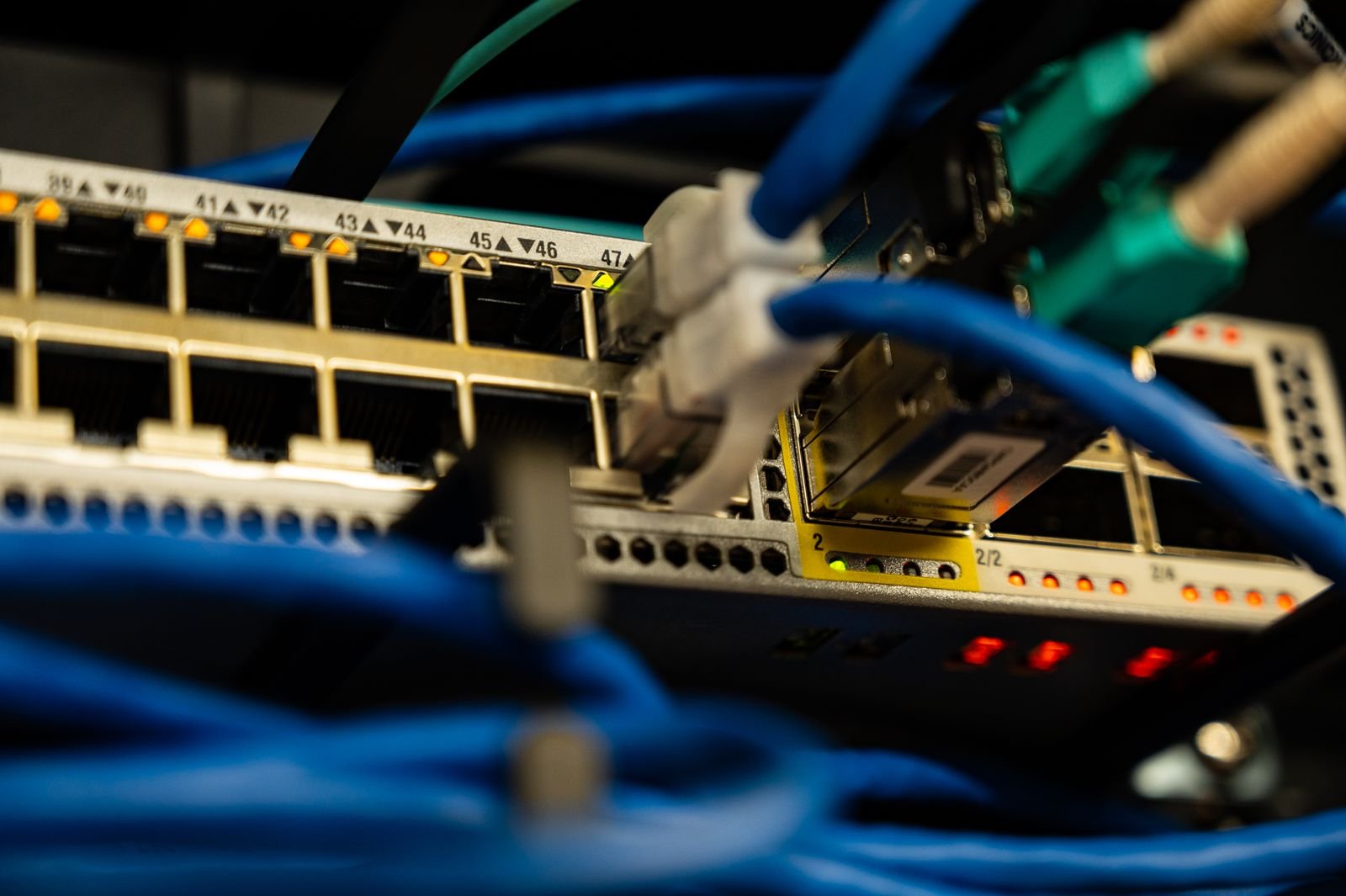
The ugly version of this starts with someone noticing that a network controller has written a file it had no business writing.
Not a dramatic ransom note yet. Not a blinking red dashboard. Just a changed file on a box that controls how branch offices, data centers, and cloud edges talk to each other. That is usually the part people miss, because SD-WAN management planes are treated like boring infrastructure until they become the attacker’s favorite part of the estate.
CVE-2026-20262 is not an NGINX vulnerability. The facts here point to Cisco Catalyst SD-WAN Manager, and that distinction matters. If your team saw a vague warning about an edge-facing CVE and mentally filed it under web servers or reverse proxies, pull it back out. This one sits in the network control layer.
CISA added CVE-2026-20262 to the Known Exploited Vulnerabilities catalog on June 15, 2026. It is actively exploited, and CISA notes known ransomware use. That is enough signal to move it out of the normal patch management queue and into the small pile of work that gets done now.
What the bug actually lets an attacker do
Cisco Catalyst SD-WAN Manager contains a directory or path traversal vulnerability. In plain English, an authenticated remote attacker may be able to create a file or overwrite any file on the filesystem of an affected system.
That sentence should make anyone who has operated Linux systems sit up a bit. File write bugs are rarely just file write bugs for long. The exact blast radius depends on the affected version, deployment, permissions, configuration, and what else is reachable from the manager. But the defensive question is simple enough: do you want an attacker who already has some authenticated access writing arbitrary files on your SD-WAN manager?
No. You do not.
The authentication requirement is not a comfort blanket. Attackers get credentials through phishing, reused passwords, exposed admin accounts, weak identity plumbing, stolen session material, and earlier compromises. In incident response, authenticated vulnerabilities are common because attackers do not need magic. They need one working account, one forgotten integration credential, or one management path that should never have been reachable from the internet.
Once they have that foothold, a path traversal bug can turn a constrained action into a filesystem write outside the intended directory. That is the core failure mode. The application thinks it is writing somewhere safe. The attacker manipulates the path so the write lands somewhere else.
Who should care first
The highest risk group is any organization running Cisco Catalyst SD-WAN Manager where the management interface is exposed beyond a tightly controlled admin network. Internet exposure is the obvious red flag, but do not stop there. A manager reachable from a flat corporate network, a vendor VPN, or a jump host with loose access control can still be a problem.
This matters most for teams where SD-WAN is carrying branch connectivity, production application paths, cloud interconnects, or traffic policy. If the manager is compromised, the incident is not just about one appliance. It can become a question about trust in routing, policies, credentials, backups, logs, and every managed edge device.
The business translation is blunt: this is the system that helps decide how parts of the company reach each other. If attackers can tamper with it, the outage and investigation can spread fast.
A pattern we keep seeing in assessments is that management planes are documented less carefully than public applications. Teams know what is behind Cloudflare, an ingress controller, or an external load balancer. They are less sure which network consoles are reachable from which VPN pools, which vendor accounts still work, and which admin interfaces quietly became public during a migration.
That is how exposure lingers.
How I would check exposure today
Start with inventory, not vibes. Find every Cisco Catalyst SD-WAN Manager instance, including lab, DR, migration, and old regional deployments. The stale one is often the one with the worst access control.
If you maintain an asset inventory, query it directly. If you do not, use your source of truth for DNS, cloud assets, firewall objects, and certificates. Look for names people actually use, not only product names.
# Examples of names worth searching for in internal DNS and cert inventories
sdwan
vmanage
catalyst-manager
wan-manager
cisco-sdwan
From a controlled scanner inside your environment, verify where the manager responds. Do this only against ranges you own or are authorized to test.
nmap -Pn -sV -p 443,8443,830,22 10.20.0.0/16 -oA sdwan-manager-scanThat does not prove vulnerability. It tells you what is listening and where to look next. Match discovered hosts against your CMDB, firewall rules, identity controls, and Cisco version data.
For internet exposure, check your external attack surface tooling if you have it. If you do not, at minimum review public DNS and perimeter firewall NAT rules. Cloud teams should check security groups, load balancers, public IP assignments, and route tables. On-prem teams should check edge firewall rules and VPN concentrator access policies.
The question to answer is not, "Can the whole internet log in?" The better question is, "Can anyone outside the intended admin path reach the login surface?"
That includes contractors, broad VPN groups, legacy bastions, and office networks where ordinary user workstations live.
What to look for in logs
Because CVE-2026-20262 requires authenticated remote access, your first useful clues are often identity and management activity. Pull authentication logs for the manager and surrounding identity providers. Look for new admin sessions, failed login bursts, impossible travel, logins from unusual VPN pools, and service accounts behaving like humans.
Then look for filesystem changes that do not line up with normal maintenance. The exact paths and log locations depend on your Cisco deployment and version, so use Cisco’s advisory and operational docs for the authoritative checks. Do not rely on a blog post for product-specific forensic paths.
Useful investigation questions:
- Which accounts logged into Catalyst SD-WAN Manager after June 15, 2026?
- Were any successful logins preceded by failed attempts or password resets?
- Did any admin activity occur from unusual source IPs or VPN groups?
- Were new files created in unexpected directories?
- Were existing system or application files modified outside a change window?
- Did backups, configs, or logs change after suspicious access?
If you have EDR or file integrity monitoring on the host, query it. If you do not, this is one of those moments where the absence of telemetry becomes part of the incident report.
For SIEM searches, start simple and widen carefully:
product="Cisco Catalyst SD-WAN Manager" AND (login OR authenticated OR admin)

host="sdwan-manager-*" AND (file_created OR file_modified OR path_traversal)

source_ip NOT IN approved_admin_networks AND action="login_success"
Your field names will differ. The point is to combine three things: successful authentication, unusual source, and file change activity.
Fixing it without pretending patching is magic
CISA’s required remediation for CVE-2026-20262 is to apply mitigations according to vendor instructions, follow BOD 26-04 risk-based security update guidance, observe CISA’s forensics triage requirements, and evaluate each asset’s internet exposure. If mitigations are not available, discontinue use of the product where applicable.
That is formal language. The working version is this:
Take the manager off broad networks. Apply Cisco’s mitigation or update guidance. Preserve evidence before you flatten anything. Prove the exposure is gone. Then verify the box and its managed environment were not already touched.
Do the access control work even if you patch immediately. A patched SD-WAN manager exposed to the internet is still a management plane exposed to the internet. That is a design smell.
A reasonable emergency runbook looks like this:
- Identify every Catalyst SD-WAN Manager instance.
- Confirm affected versions against Cisco’s advisory.
- Restrict management access to approved admin networks and hardened jump hosts.
- Remove public exposure unless Cisco explicitly requires it, which would be unusual for normal admin access.
- Apply vendor mitigations or fixed versions.
- Rotate credentials used by the manager and privileged admin accounts if compromise is suspected.
- Review logs and filesystem changes before and after remediation.
- Document the decision if any instance cannot be patched immediately.
That last item is not bureaucracy. It is how you avoid the quiet exception that survives for six months because everyone thought someone else owned it.
Where teams usually get this wrong
They patch the obvious production manager and forget the secondary one.
They close the public firewall rule but leave access open from a giant VPN group called something like All Employees.
They update the software and skip forensics, even though the CVE is in CISA KEV and has known ransomware use. Patching after exploitation does not remove an attacker’s files, accounts, tokens, or configuration changes.
They treat ransomware as an endpoint problem. Ransomware operators like control planes because control planes give them options. Network management systems, identity providers, hypervisors, backup consoles, and cloud admin paths are all worth more than a random laptop.
This is where offensive and defensive security work should meet. A pen-test can confirm whether the manager is reachable from places it should not be. Threat detection can tell you whether access patterns changed. Incident response can preserve and interpret evidence if the timeline looks bad. Hardening can make sure the same class of exposure does not come back during the next migration.
None of that requires panic. It does require ownership.
If you only do one thing this week
Find every Cisco Catalyst SD-WAN Manager instance and prove whether it is exposed outside a narrow admin path.
Do not start with a spreadsheet debate about severity scores. CVE-2026-20262 is already in CISA KEV, added on June 15, 2026, actively exploited, and associated with ransomware use. That is the vulnerability management equivalent of a smoke alarm going off in a room where you store fuel.
Patch according to Cisco’s instructions. Apply CISA’s remediation guidance. Check for signs of prior access. Then fix the access model so the next management-plane CVE is not reachable by half the company and three forgotten vendor tunnels.
The best outcome is boring: you patch, you confirm no exposure, you find no suspicious activity, and you move on with better controls than you had yesterday. Security work has plenty of drama already. Do not donate your SD-WAN manager to the plot.
If this is on your plate, TecLeads does exactly this as part of our Cybersecurity work. If you'd like a second pair of eyes on your setup, book a 30-minute call or explore what we do.